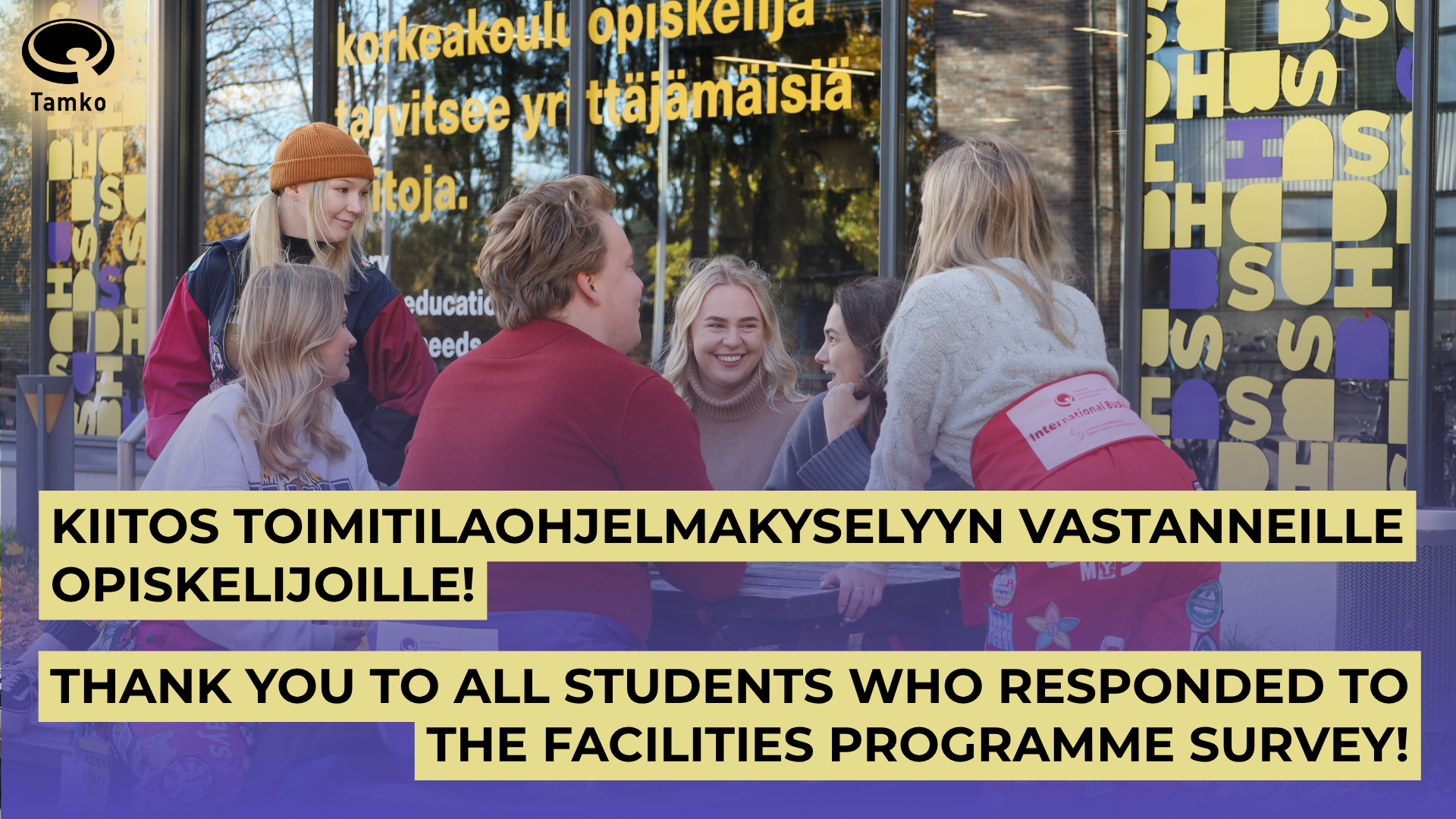

Through a joint survey conducted by Students’ Union Tamko and TAMK, we aimed to form as comprehensive picture as possible of how students experience TAMK’s campus facilities in their daily lives. The survey examined the current situation and facilities, the use of them and the role of student associations and club spaces as part of the campus life. At the same time, we gathered views on what kinds of learning environments would best support studying in the future. The feedback will be used in preparing TAMK’s campus development facilities programme, where students’ perspectives will complement the data already collected from staff.
Based on the answers, students use TAMK’s various spaces in diverse ways. However, a clear message emerges that finding a suitable place to study is often challenging and there is a particular shortage of small group spaces and spaces for independent study.
Current situations key theme is the experience of the accessibility of spaces. Many responses describe situations where it is difficult to find or reserve a suitable space. The reservation systems are seen as unclear, lacking in functionality and restrictive from students’ perspective. At the same time respondents expressed confusion about rooms that appear empty but are not available for students use.
Student association and club spaces play a significant role in the responses. They are seen as a very important part of the student community and everyday life. As places to study, meet others and build a sense of community. The availability, accessibility and fair distribution of these spaces between different actors are considered important and central areas for development.
Future space needs answers highlight importance of flexibility and versatility. Students wish for spaces that adapt to different ways of working, including spaces that would support quiet concentration, suitable workspaces for small groups and meeting/collaboration spaces that are open and comfortable. At the same time solutions that support hybrid studying are emphasised, such as meeting booths and spaces where remote connections work seamlessly.
In addition, the survey highlights everyday factors that shape the student experience such as the comfort of the spaces, ventilation, the availability of power outlets and the functionality of furniture. These factors directly influence how pleasant and smooth working on campus feels.
Comfortable, functional and well-equipped spaces encourage people to stay on campus longer to study and work. When campus spaces are perceived as functional and inviting, this is reflected in the overall quality of the student experience, the sense of community and ultimately in the attractiveness of the entire university of applied sciences institution.
Read the intranet news about the progress of the facilities programme and a summary of staff feedback here: https://intra.tuni.fi/en/content/news/71849